


Solar Images Tuesday, 19 September 2000
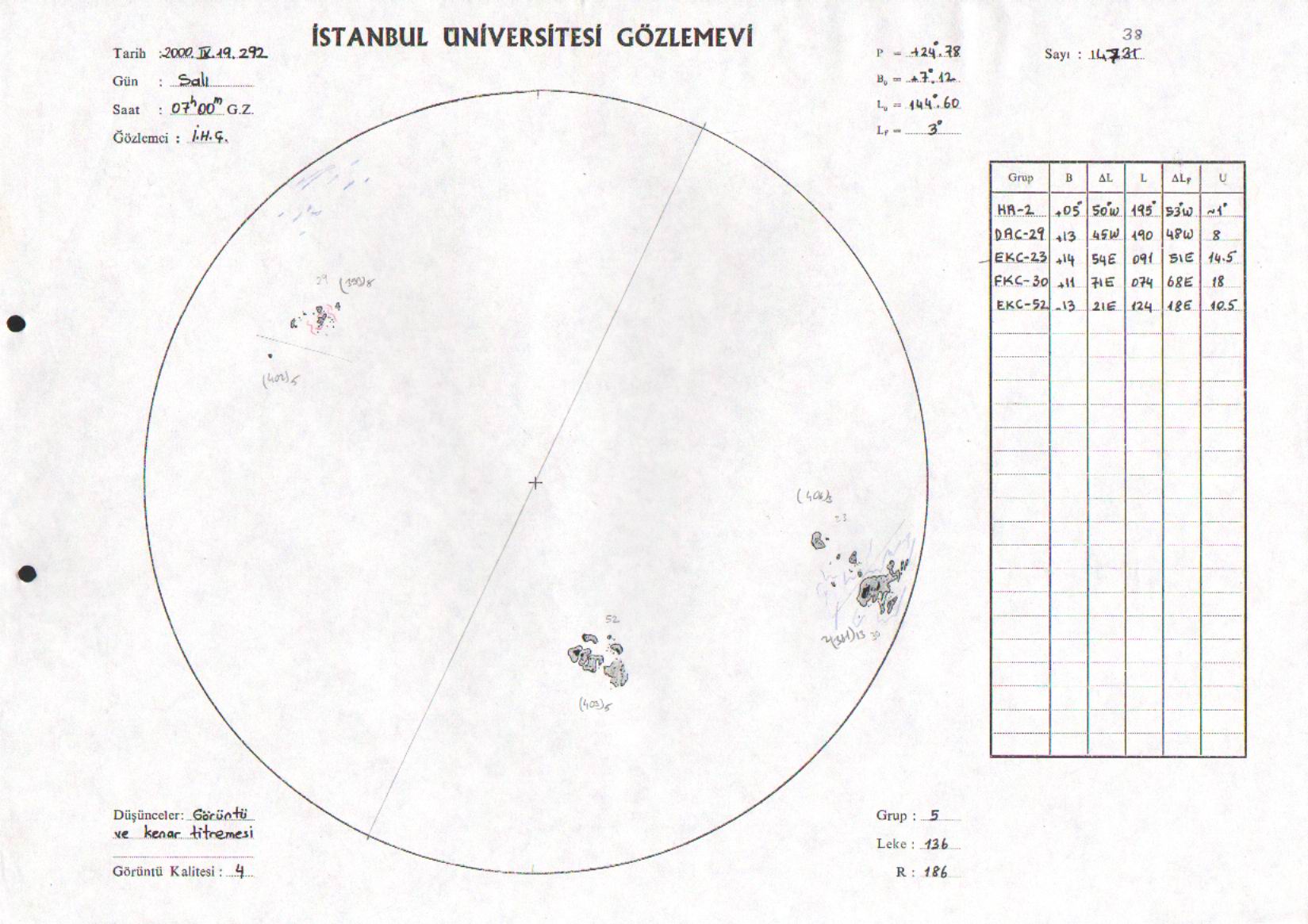
‹ 18.09.2000 2000 20.09.2000 ›Photosphere sunspot drawing and RDS evaluation
Chromosphere (H-α) FITS frames
No chromosphere observation for this day.
Coronado H-α animations from frame sequences
No Coronado observation for this day.
On the Sun this day from the NOAA/SWPC event lists
| Time (UT) | Event | Region |
|---|---|---|
| 01:41–01:52 | C2.6 | 9166 in our drawing |
| 03:28–03:37 | C4.9 | 9166 in our drawing |
| 05:13–05:35 | C2.9 | – |
| 08:06–08:42 | M5.1 | 9165 in our drawing |
| 08:09–09:30 | H-α 1N ERU · N14W46 | 9165 in our drawing |
| 08:18–08:19 | radio type II/1 · shock ~399 km/s | 9165 in our drawing |
| 08:24–08:24 | radio type II/1 · shock ~576 km/s | – |
| 14:31–14:41 | C2.0 | 9169 in our drawing |
| 15:13–15:24 | C3.0 | 9166 in our drawing |
| 15:16–15:38 | H-α 1F DSD · S08E12 | 9166 in our drawing |
| 21:56–22:09 | C2.0 | – |
| 22:55–22:57 | radio type II/1 · shock ~230 km/s | 9166 in our drawing |
X-ray flares from the GOES satellites (C, M, X); H-α flares from ground stations (importance: S small, 1–4 larger; F/N/B faint/normal/brilliant; small S flares are listed only if they happened during our observation). A type II radio burst shows a shock wave (usually a coronal mass ejection). Chart: GOES X-ray flux (blue line; every peak is a flare, the letters on the right mark the classes); yellow strips are our chromosphere and blue strips our Coronado observing times.