


Solar Images Monday, 31 August 2026
‹ 30.08.2026 2026 01.09.2026 ›Photosphere sunspot drawing and RDS evaluation
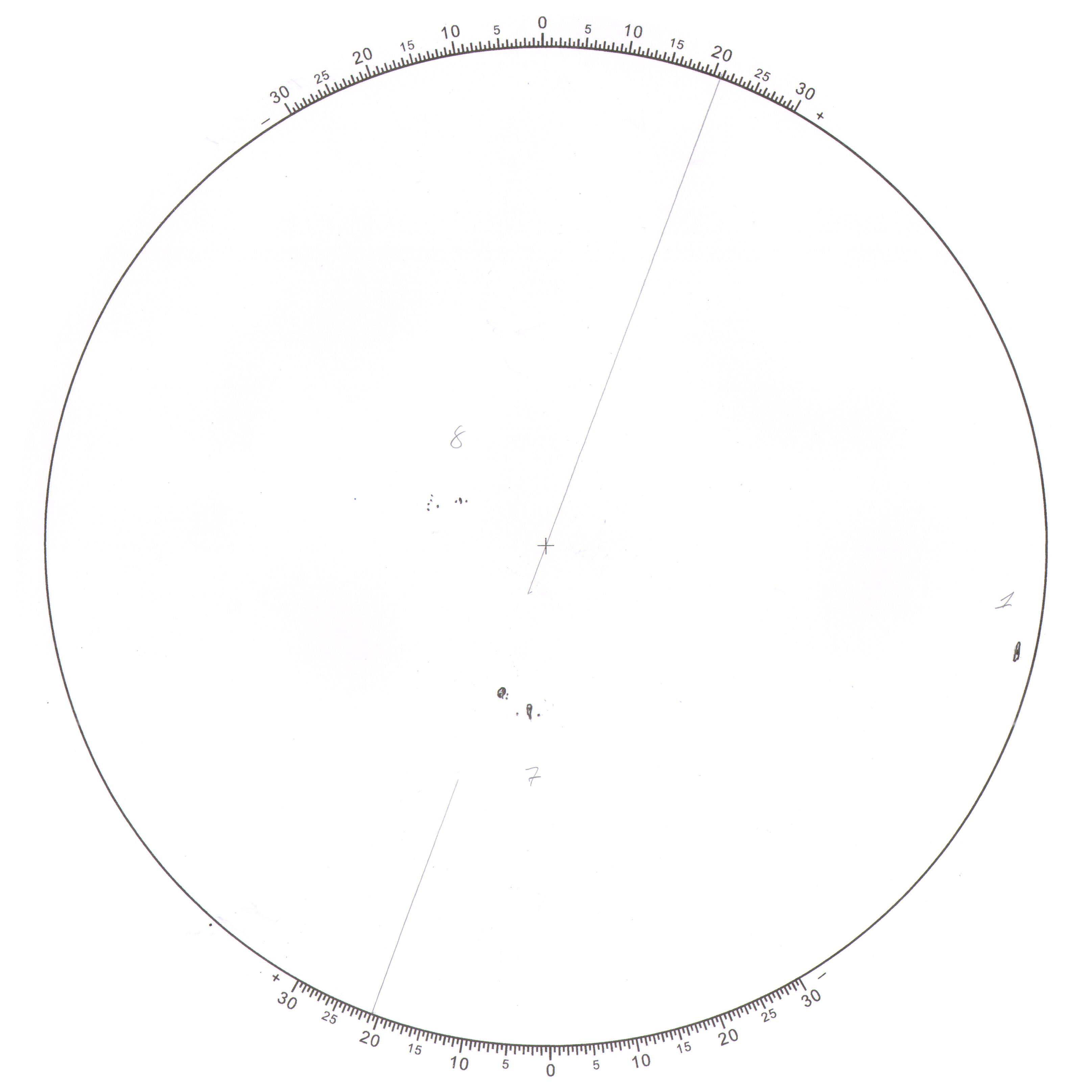
- Time
- 07:05 UT
- Observer
- Emre YILMAN
- g
- 3
- f
- 16
- R
- 46
- Seeing
- 3 / 5
Sunspot groups and observation details →
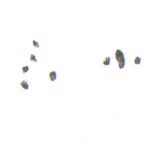
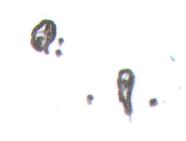
Sunspot groups (from the drawing)

RDS data file (.gzd)
[Gözlem]
Tarih=31.08.2026
Saat=07:05
Gözlemci=Emre YILMAN
KontrolEden=Emre YILMAN
Durumaçısı=20.84
Enlemaçısı=7.18
Boylamaçısı=339.77
Boylamfark=3
GKalite=3
GDurum=G.T
Kuzeyaçısı=-0.4
Sırano=20555
AyRasatNo=28
RasatÖnceki=30.08.2026
RasatSonraki=01.09.2026

[Leke Grupları]
Grupsayısı=3:2:1
LekeSayısı=16:9:7
RölatifSayı=46:29:17
01=BXI 08 +07.536 +12.437 352.207 +0.000 0000 0 +09.340 +14.660 +06.390 +10.215 +07.536 +14.460 +07.536 +10.415
02=HS_ 01 +09.243 -75.985 263.785 +0.000 0000 0 +10.466 -74.856 +08.190 -77.114 +09.243 -75.356 +09.243 -76.614
03=DKO 07 -11.247 -03.478 336.292 +0.000 0000 0 -09.893 -00.635 -12.601 -06.321 -11.247 -00.835 -11.247 -06.121
20260831.gzd
Chromosphere (H-α) FITS frames

Disk (chromosphere) · 07:17 UT · 30 ms
This frame is also the best prominence image of the day.
The images are made automatically with a fixed, gentle rule: dust shadows of the camera are removed, uneven illumination and most of the limb darkening are corrected, and the brightness is shown on a linear scale (no sharpening); prominences get their own scale outside the limb. Two images of the day are shown. Disk: the sharpest (seeing) of the good frames (no ⚠: not over-exposed, no cloud, the whole Sun in the field). Prominences: the frame in which the prominences outside the limb stand out most against the sky noise; long exposures count here too (their disk is over-exposed on purpose). For such a frame the disk is taken from a short frame of the same session (two real frames joined at the limb, both named in the caption); otherwise the disk is covered by a dark occulting disk. When one series has several good frames, they are aligned on the Sun and averaged; the average is shown instead, and labelled, when it keeps the structure and lowers the noise. Method → The images are for viewing; brightness measurements must use the FITS files. Scientific use →
2026/20260831_ey · EY · 6 frames · 128.6 MB · 07:16:40–07:19:41 UT


Coronado H-α animations from frame sequences
No Coronado observation for this day.
On the Sun this day from the NOAA/SWPC event lists
No listed flare happened while we were observing in H-α.
| Time (UT) | Event | Region | Our observation |
|---|---|---|---|
| 03:31–03:35 | C1.0 | 14518 in our drawing | |
| 13:57–14:17 | C1.4 | 14520 in our drawing | |
| 14:17–14:29 | C1.4 | – | |
| 14:29–14:50 | C1.6 | – | |
| 15:09–15:21 | C2.6 | 14520 in our drawing |
X-ray flares from the GOES satellites (C, M, X); H-α flares from ground stations (importance: S small, 1–4 larger; F/N/B faint/normal/brilliant; small S flares are listed only if they happened during our observation). A type II radio burst shows a shock wave (usually a coronal mass ejection). Chart: GOES X-ray flux (blue line; every peak is a flare, the letters on the right mark the classes); yellow strips are our chromosphere and blue strips our Coronado observing times.